

How freshwater systems can continue to provide safe drinking water as climate pressures grow. How the ocean captures carbon dioxide that drives climate change. Where marine animals travel as their ecosystems shift around them. And how to ensure Canada’s history isn’t lost in the algorithms of the digital age.
To understand systems like these, researchers need the tools to investigate them properly.
The ÌýFriday (March 13) that AV¾ãÀÖ²¿ has received more than $7.3 million in grants through its Innovation Fund. The new funding will support four major research infrastructure projects spanning climate-resilient water engineering, ocean carbon science, global ocean monitoring, and digital transformation for Canada’s historical record.
“State-of-the-art research infrastructure is essential for tackling the complex challenges facing our communities and environment,â€� said Dr. Graham Gagnon,Ìý vice-president for research and innovation at Dal and a co-lead of one of the newly funded projects. “These investments equip our research community with the tools they need to generate new knowledge, train highly skilled talent, and work with partners at home and around the world to deliver solutions that benefit Canadians.â€�
Advancing climate-resilient water systems
Ìý
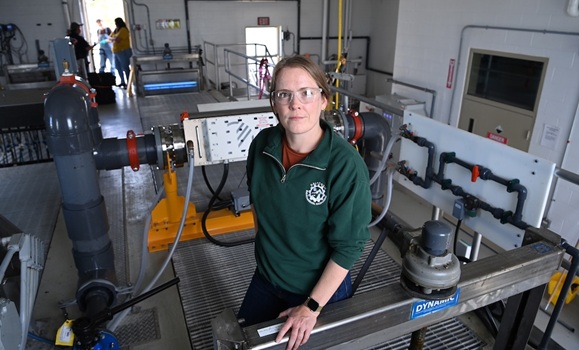
Dr. Amina Stoddart on site at a Halifax Water treatment facility. (Daniel Abriel photo)
With support from CFI, Drs. Gagnon and Amina Stoddart of AV¾ãÀÖ²¿â€™s Faculty of Engineering will lead the development of the Water RESILIENCE Lab at the university, an initiative focused on developing advanced monitoring and treatment technologies to help communities manage growing water risks linked to climate change.
“Investing in this research safeguards Canada's water resources, supports actionable science for communities, and positions the country as a global leader in climate-resilient water stewardship,â€� says Dr. Stoddart, AV¾ãÀÖ²¿â€™s Canada Research Chair in Wastewater Treatment Technology and Surveillance.
Canada’s freshwater resources face increasing pressures from changing weather patterns, emerging contaminants and aging infrastructure. The new infrastructure will enable the engineers to detect changes in water quality more rapidly and develop effective and energy efficient approaches to treatment. New equipment includes automated genomic and flow cytometry systems, high-resolution mass spectrometry, and ultraviolet LED disinfection systems. These technologies will enable researchers to track climate-driven changes in watersheds, identify emerging contaminants and design new low-carbon approaches to remove pollutants such as PFAS and waterborne pathogens.
The initiative is supported by a CFI award of $1.37 million toward a total project cost of $3.43 million.
Understanding the ocean’s role in climate
Ìý
 The Faculty of Science’s Drs. Erin Bertrand and Carolyn Buchwald will lead a major new effort to better understand how the ocean stores and cycles carbon in a rapidly changing climate.
Their project, “Quantifying the ocean carbon climate system in a changing world,� will build laboratory infrastructure geared to explore how the ocean stores carbon and how this capacity is changing. This research will help scientists improve models used to predict the future impacts of climate change and evaluate emerging approaches for leveraging the ocean’s carbon cycles to remove greenhouse gas from the atmosphere.
Shown above right:ÌýDr. Erin Bertrand.
“The ocean absorbs much of the carbon dioxide humans release, but many of the processes that make this possible are not well understood,â€� says Dr. Bertrand, who recently assumed the role of acting scientific director and CEO of AV¾ãÀÖ²¿â€™s Ocean Frontier Institute. “This new infrastructure gives us the ability to examine those processes in much greater detail and to generate evidence that governments and communities can rely on when making decisions about climate action and ocean stewardship.â€�
(Matthew Bara photo/Pexels)
The research will focus on the Northwest Atlantic, the Arctic Gateway and the St. Lawrence system – regions experiencing rapid environmental change and playing an outsized role in ocean-climate interactions.
The project is supported by a CFI award of $3.02 million toward a total project cost of $7.55 million and is being conducted in collaboration with the Université du Québec à Rimouski.
Accelerating ocean tracking to support near-real-time management
Ìý

Dr. Robert Lennox
Another major investment will support the Ocean Tracking Network (OTN), a globally recognized aquatic research organization headquartered at AV¾ãÀÖ²¿.
Led by Drs. Robert Lennox and Sarah Fortune, the project will renew and upgrade key infrastructure used to track the movements of marine animals and monitor ocean conditions. For nearly 20 years, OTN has been deploying innovative monitoring equipment — tags, acoustic receivers, and ocean-going robots such as gliders and remotely operated vehicles — in key ocean and freshwater locations across the globe.
“OTN brings together researchers around the world who are working to understand how aquatic animals move through and interact with marine ecosystems,� says Dr. Lennox, OTN’s scientific director. “Upgrading this infrastructure strengthens Canada’s ability to lead that global effort and to turn ocean observations into knowledge that supports responsible management of the ocean and related industries.�
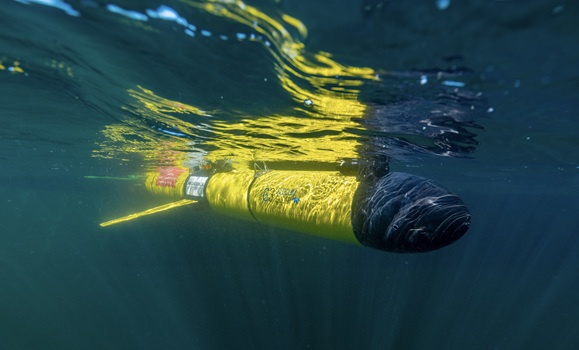
Slocum gliders dive up and down the water column, detecting acoustic signals from tagged animals and measuring oceanographic variables. Photo: Nicolas Winkler Photography
The new infrastructure will refresh equipment nearing the end of its operational life and increase capacity for near-real-time monitoring of marine animals and ecosystems, enhancing Canada’s ability to inform evidence-based management of fisheries, conservation and other activities.
The project has received a CFI award of $2.62 million toward a total project cost of $6.67 million, with matching funding secured from Fisheries and Oceans Canada, as well as in-kind contributions from manufacturers.
Building Canada’s digital history for the future
Ìý

Dr. Stacy Allison-Cassin
Dr. Stacy Allison-Cassin of the Faculty of Management is a co-applicant on the project “Open Science Infrastructure for Canad(ian)a: Digital Collections of the Future� led by the University of Ottawa. The national initiative aims to transform access to Canada’s historical record.
“Canadians’ understanding of the social, economic and political forces that shape their lives depends on access to reliable information about our past,� says Dr. Allison. “This project will help researchers unlock millions of historical documents using advanced digital methods, creating new opportunities to explore Canada’s history and ensure those records remain accessible and meaningful.�
Funded infrastructure will enable researchers to organize and analyze millions of pages of historical documents using advanced digital tools and artificial intelligence. The project will provide a data-driven historical lens on the social, economic, political, and cultural forces that shaped Canada and help ensure that a full picture of Canada's past is part of the AI-driven future.
AV¾ãÀÖ²¿â€™s portion of the project includes $295,943 in CFI funding toward total institutional project costs of $675,941.
Investing in research infrastructure
The CFI Innovation Fund (CFI IF) supports large-scale research infrastructure projects that enable world-leading research across disciplines. The CFI IF program provides up to 40 per cent of the total project costs. Institutions typically secure remaining project funding through partnerships with provincial governments, industry and other organizations.
“This significant investment through the CFI’s flagship Innovation Fund will help propel Canada forward by advancing innovation in areas critical to our future. By supporting state-of-the-art labs and equipment, this funding will foster collaboration, attract and train the next generation of talent and accelerate the commercialization of solutions that delivers real benefits for Canadians,� says Sylvain Charbonneau, president and CEO of the Canada Foundation for Innovation.
The AV¾ãÀÖ²¿ funding is part of a national announcement of more than $552 million to support 92 research infrastructure projects at 32 institutions across the country. Infrastructure funded through the 2025 competition will also receive additional support through the CFI Infrastructure Operating Fund to help cover operational costs.
By investing in advanced research infrastructure, the program strengthens Canada’s ability to attract and retain top research talent, foster collaboration across sectors and generate discoveries that benefit communities, industry and the economy.