

THE SNAPSHOT
AV俱乐部 researchers are helping to answer one of climate action鈥檚 most urgent questions: whether the ocean can safely remove carbon dioxide from the atmosphere at meaningful scale. Their work is positioning Nova Scotia as a global leader in carbon-dioxide removal while supporting the growth of a new climate-technology sector for the province.
THE CHALLENGE: Evidence for the environment
Climate action has long focused on cutting the carbon rising from smokestacks, tailpipes and power plants. That remains the essential task. But a second challenge is coming into sharper view: what to do with the carbon already added to the atmosphere, and whether the ocean can help pull some of it back.
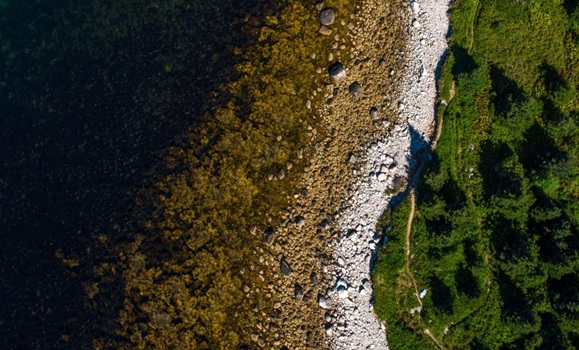
Nova Scotia coastal waters are home to leading mCDR research.
The ocean already does this work, absorbing and storing vast amounts of carbon as part of the planet鈥檚 natural systems. Proponents of marine carbon dioxide removal believe that capacity can be expanded. But promise is not proof. Before the field can scale, scientists, regulators and communities need evidence that these approaches work, can be measured and pursued safely.
The effort to answer those questions is increasingly drawing the world to Nova Scotia. From April 28 to 30, close to 300 researchers, innovators and policymakers will gather in Halifax for the聽聽Annual Convening聽focused on the science, governance and future of ocean-based carbon dioxide removal.聽
Canadian 聽of Nova Scotia says Halifax is a strong choice for the gathering, citing its emergence as an international hub where ocean science, climate innovation and a fast-growing marine technology sector are converging. The central question they've come to address is whether the ocean can be leveraged to remove carbon at the pace the climate crisis demands without damaging its fragile ecosystems.
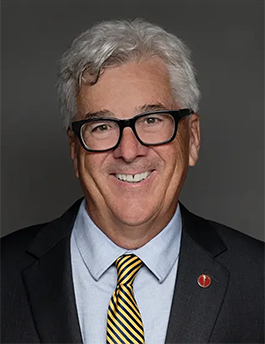 Senator Deacon, whose Senate committee produced a , sees both urgency and risk with the potential for the technology to be stymied by a lack of balance between scientific evidence, regulation, and applied innovation.
Senator Conlin Deacon.
鈥淪ocial licence is critical to the effective and economically viable effort to scale this technology,鈥� he says of a field whose future will depend on public trust and participation. 鈥淚f we don鈥檛 keep communities informed with the evidence as we scale the technology, then we鈥檙e going to face roadblocks everywhere we look.鈥�
That, Senator Deacon says, is where AV俱乐部 and its 聽(OFI) have become central to the story, helping build the scientific foundation for a field that is drawing attention from around the world.
THE SOLUTION: Ready for climate action
鈥淲e鈥檝e got expertise built up in many of the sectors that are required to make good decisions about marine carbon dioxide removal,鈥� says AV俱乐部 ocean scientist Dr. Erin Bertrand, acting scientific director and CEO of OFI. 鈥淲e were ready well before the research problem came to the forefront.鈥�
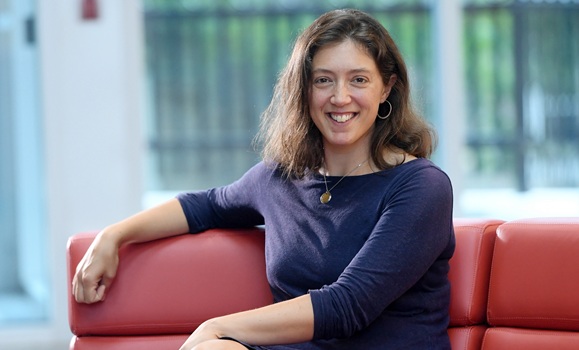
Dr. Bertrand at AV俱乐部鈥檚 Steele Ocean Science Building.
At AV俱乐部 and through OFI鈥檚 extended network, dozens of researchers are studying how carbon moves through coastal waters, how removal can be measured and verified, how marine ecosystems may respond, and what safeguards are needed before the nascent industry scales.
Part of that work is supported through , a research program led by OFI built around an ocean-first approach to understanding and mitigating climate change. Backed by $154 million from the Government of Canada through the Canada First Research Excellence Fund, the program includes a dedicated focus on ocean-based carbon dioxide removal.
Learn more about the Transforming Climate Action research program.
For Dr. Bertrand, AV俱乐部鈥檚 contribution is rooted in what universities do best 鈥� bringing rigor, independence and evidence to questions of consequence. She says, if findings support the field, they can help move it forward. But if not, or not exactly, they can point efforts in new directions.
THE WORK: Putting mCDR to the test
Dr. Bertrand says a concentration of advantages make Nova Scotia unusually well suited to the study of mCDR, anchored by the Bedford Basin. AV俱乐部鈥檚 depth in ocean science, a growing marine innovation sector and years of study in this deep, sheltered inlet housing Halifax Harbour form what she calls a 鈥減lace-based research platform.鈥�
鈥淭he Bedford Basin gives us a real advantage,鈥� she says. 鈥淲e have this long-term time series, and people who are deeply familiar with its oceanographic, biological, and chemical conditions. That baseline allows us to look for the kinds of changes we need to understand if we鈥檙e going to properly assess environmental effects.鈥�
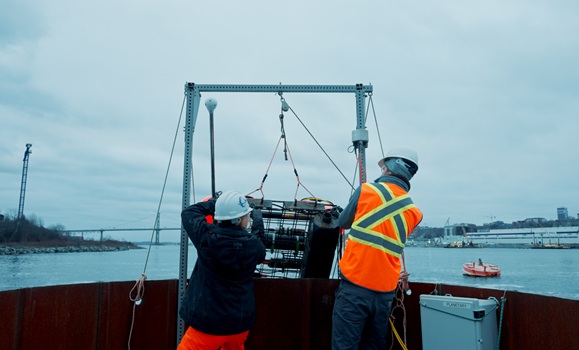
Members of Ocean Alk-align team work with Planetary to study their work.
One of the researchers working in Basin is oceanographer聽Dr. Katja Fennel,聽the lead聽principal investigator聽of聽, an international project funded by the Carbon to Sea Initiative to study ocean alkalinity enhancement, or OAE, as a promising mCDR method. OAE works by adding alkaline聽minerals聽to seawater, increasing its ability to absorb and hold carbon dioxide. The method aims to accelerate the natural process of rock erosion 鈥� as rocks weather, they release alkaline minerals that help the ocean store carbon as stable dissolved compounds.
Dr. Fennel and her team are working closely with Halifax-based company聽聽to study their OAE operations in the city鈥檚 harbour. The company adds alkalinity to the cooling water that exits from Nova Scotia Power鈥檚 Tufts Cove Generating Station, allowing AV俱乐部 researchers to conduct experiments as the outflow mixes聽into the basin.
Their applied studies allow the researchers to focus on the field鈥檚 central challenges: how to best聽measure, report and verify whether carbon removal is happening, how long it lasts, and whether the ocean and its ecosystems are responding safely.
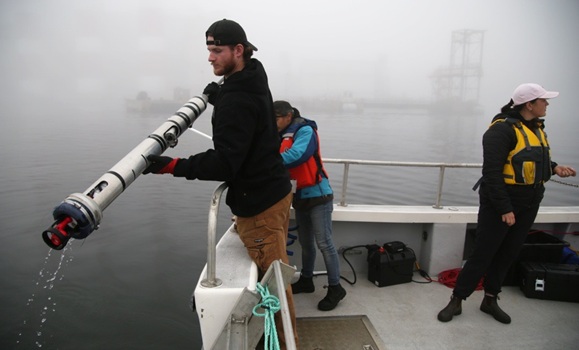
Researchers retrieve their sensing instrument from the Bedford Basin.
Farther north along Nova Scotia鈥檚 eastern coast, the Strait of Canso 鈥� the narrow tidal channel separating Cape Breton from the mainland 鈥� is set to become another site for AV俱乐部鈥檚 growing work in mCDR.
AV俱乐部 engineer Dr. Adam Yang is working with pHathom, a Halifax-based company developing a different approach to ocean carbon removal. Rather than adding alkalinity directly to seawater, pHathom鈥檚 system captures carbon dioxide on land using limestone inside engineered reactors. The process produces bicarbonate-rich material that can be returned to the ocean, where the carbon can be stored.
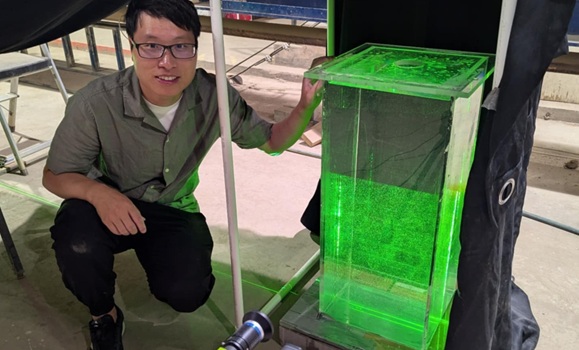
Dr. Yang preparing for a laboratory tank flow measurement using a dyed liquid.
鈥淭he company has developed reactor technology to draw down the CO2. AV俱乐部 is providing the capacity to test the technology and guidelines for pilot deployments,鈥� says Dr. Yang.
This testing is taking place in the university鈥檚 Aquatron, a controlled marine research facility where scientists can simulate ocean conditions before moving experiments into open water. There, Dr. Yang and Dr. Ricardo Arruda, a AV俱乐部 PhD graduate and OFI/Mitacs-supported postdoctoral fellow working with pHathom, are studying how the bicarbonate-rich material behaves when it enters a marine system like the Strait of Canso.
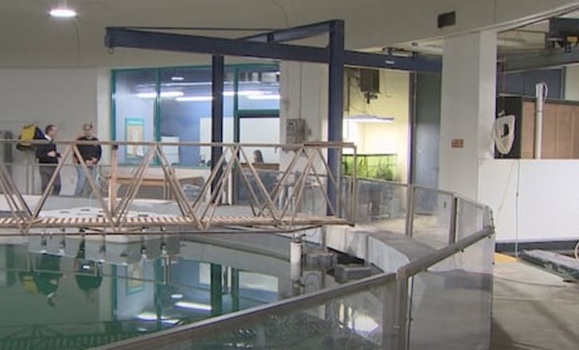
AV俱乐部鈥檚 Aquatron, Canada鈥檚 largest university-based ocean research facility.
At the same time, another OFI/Mitacs-supported postdoctoral fellow, Dr. Marzia Khosravi, is modelling circulation in the strait, where future field trials will take place. The goal is to understand where the water moves, how it mixes and whether the carbon remains stored over time.
鈥淲e want to understand whether circulation will carry the material toward the open ocean,鈥� says Dr. Yang. 鈥淏efore a pilot study happens, we need to understand whether that is the case.鈥�
THE IMPACT: From Nova Scotia waters to the world
If AV俱乐部鈥檚 work helps answer if mCDR can be done safely, credibly and at scale, the impact could reach well beyond the Bedford Basin or the Strait of Canso. It could help secure Nova Scotia鈥檚 position as a place where climate technologies are imagined, tested and brought to life with the evidence needed to earn public trust.
鈥淚 envision Halifax and Nova Scotia becoming even more of a hub for these approaches,鈥� says Dr. Bertrand. 鈥淚f we become known as the place where good academic partnered research happens in this space, and we have platforms ready to go to apply to new approaches, we will continue to attract companies and new ideas.鈥�
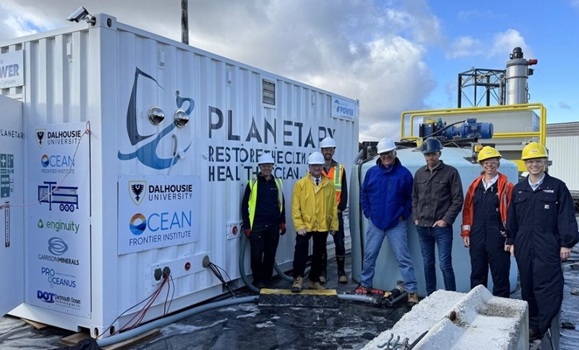
Senator Deacon centre in the blue coat visits to Planetary OAE site in Halifax.
Senator Colin Deacon sees the same opportunity in broader economic terms. For him, the promise is not simply that mCDR could be tested in Nova Scotia, but that the province could help build the companies and technologies needed to scale it globally.
鈥淚 can鈥檛 even begin to imagine what the industry will bring here over time. But I can see those with scalable technologies, like Planetary building equipment in Nova Scotia and shipping it to sites anywhere you could imagine,鈥� he says. 鈥淭his is an opportunity for us to scale a technology globally, because we鈥檙e all fighting climate change, and we all have to reduce and remove.鈥�