
Stakeholder Engagement
Workshop Gallery




 泭
泭
Community-Based Planning and Design for the Electrification of Transport Systems in Rural Municipalities
The Low Carbon Communities Rural Transportation Electrification Project is now complete. Please visit our dedicated page to read the final report and view associated project materials.
Why Engage?
Engagement with stakeholders has been central to this project from the very beginning. By collaborating with rural municipalities, community organizations, provincial agencies, and transportation advocates, it ensured that this initiative used local knowledge, priorities, and lived experiences to shape the planning and design of rural electrification strategies.
The engagement process has included early sessions that helped inform the project���s development, as well as a series of structured workshops designed to guide the project���s implementation.
Pre-Project Engagement Sessions
泭
Workshop #1 Electrification Strategies
May 16, 2025 | Halifax, NS
[PDF - 2.2MB]

 泭
泭
The first in-person workshop was held at the Halifax Central Library and brought together stakeholders from rural municipalities, transit organizations, non-profits, and provincial agencies. The session began with a presentation on the state of rural transport electrification in Nova Scotia, including findings from the NovaTRAC survey. Key issues identified included affordability, infrastructure gaps, and the need for community-based solutions.
Participants took part in activities to explore their perceptions of EVs, identify benefits of electrification, and suggest guiding principles and strategies to support a net-zero future. The idea of creating the Rural Electrification Strategies Alliance (RESAlliance) was introduced to build momentum and collaboration across the province.
Key Takeaways
- Participants expressed strong interest in flexible and locally driven electrification solutions.
- There was an emphasis on expanding public education and supporting municipal partnerships.
- Transit electrification emerged as a recurring theme, signaling the need to explore it more deeply in future workshops.
This session laid the foundation for continued engagement and helped surface early insights into the opportunities and challenges facing rural electrification in Nova Scotia.
泭
Workshop #2 Transit Electrification Strategies
July 15, 2025 | Yarmouth, NS
[PDF - 1.7MB]


 泭
泭
The second in-person workshop was held at IGNITE Atlantic, bringing together local decision makers, planners, and municipal staff members.泭As with the first workshop, this session began with a presentation on the current demand for and effort being taken towards electrifying rural transportation systems in Nova Scotia and across Canada, with findings from the 2023 NovaTRAC Survey being used to highlight interest in electric transportation among Nova Scotian's. The presentation also showed how Yarmouth County is developing electric charging infrastructure to support a future focused around electric transportation.
���Just like in Halifax, participants took part in activities to explore their perceptions of EVs, identify benefits of electrification, and suggest guiding principles and strategies to support a net-zero future. To address local interest in electric bus service, a new activity asked participants to describe local initiatives being taken electrify said service. The RESAlliance was also expanded upon, bringing together likeminded people who will push forward the rural transportation electrification initiative.
Key Takeaways
Cost effectiveness, diverse funding streams, and general affordability will be central to making electrification financially feasible and achievable for rural municipalities.
It was shown that electrification should involve a variety of different transportation options and vehicle types.
Collaboration between municipalities will help simplify and lower the cost for infrastructure and vehicle procurement.
���This session helped grow the knowledge base for how rural transportation electrification can take place, as well as what should be discussed in the final workshop in Colchester.
泭
Workshop #3 Transport Electrification in Colchester
November 20, 2025 | Truro, NS
[PDF - 1.9MB]
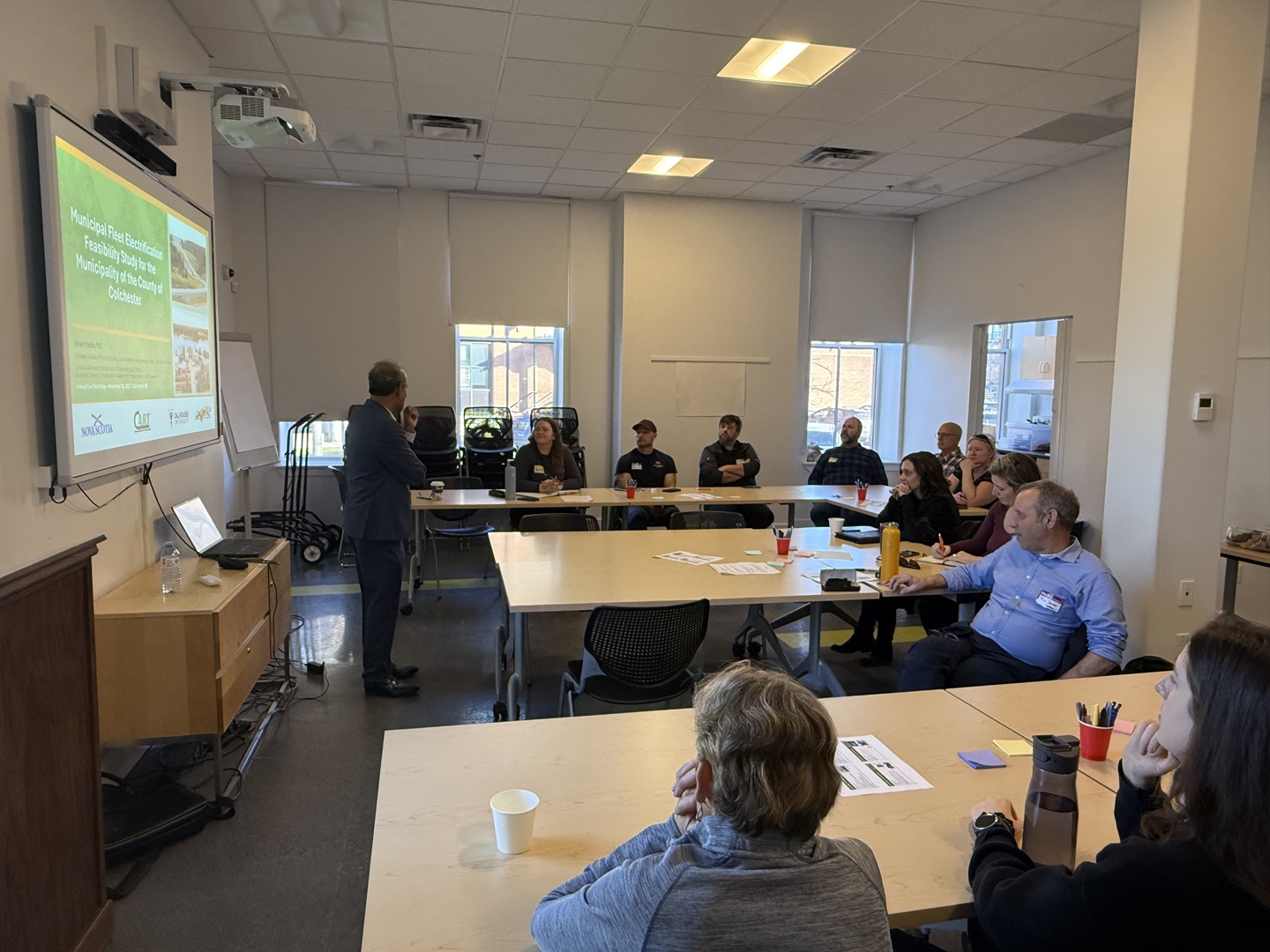


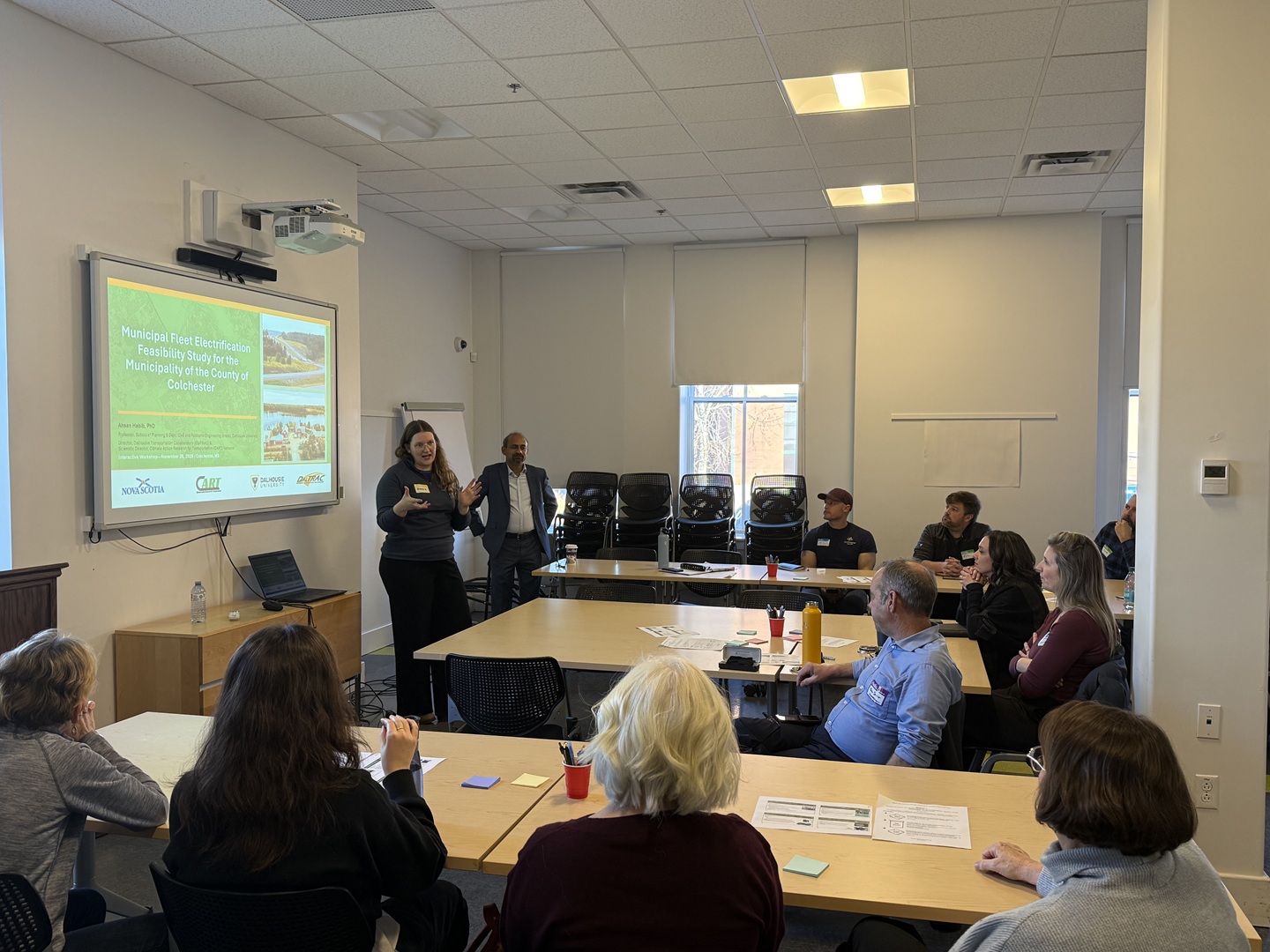
The third and final workshop was held at the Truro Library, where public officials, municipal staff members, non-profit workers, and university representatives came together to discuss transport electrification in Colchester County and across Nova Scotia. As with the first two workshops, the event started with a presentation highlighting Nova Scotia's interest in and current efforts towards electrifying rural transportation, and how examples of transport electrification in urban and rural settings can inform future development of the initiative in Nova Scotia.���������
Just like in Halifax and Yarmouth, participants worked individually or in small groups to complete activities including identifying perceptions of EVs, highlighting benefits to electrification, and creating guiding principles and strategies for electrifying rural transportation. Additionally, participants took part in a new activity which looked at identifying strategies for electrifying bus service and providing public charging infrastructure. The RESAlliance was also expanded, bringing members from Colchester together with those from Halifax and Yarmouth.
Key Takeaways
Supply chain issues and vehicle servicing gaps will cause challenges for developing electric vehicle fleets and infrastructure that fits a municipality's needs.
A municipality's public image can be enhanced through transport electrification, showcasing their sustainable, low-carbon, and future-focused mindset.
Implementation of rural transport electrification should be implemented cautiously, so vehicle purchases and infrastructure development can be right-sized, and potential cost savings can be found.
As this was the final workshop for the rural transportation electrification initiative, findings from all three workshops have been brought together and analyzed by CART members. These findings were used to develop a final report showcasing the interests of rural municipalities regarding electric transportation, and how a low carbon future can be achieved through the electrification of rural transportation systems.
 泭 泭 |
This project is supported by the Low Carbon Communities program through the Nova Scotia Department of Natural Resources and Renewables. |